Most offices need daily light cleaning (bins, high-touch surfaces, restrooms) plus a weekly deep clean of floors and common areas, with a full deep clean and disinfection every month or quarter depending on foot traffic. The right frequency for your office depends on how many people pass through it each day, whether clients visit, and how exposed you are to Malaysia’s humidity and outdoor dust.
If you’ve ever stood in your office pantry wondering whether it’s actually been mopped this week, you’re not alone. Office cleaning frequency is one of those decisions that gets made once — usually by accident — and then never revisited, even as headcount grows or the business moves into a bigger unit in Petaling Jaya, Kota Damansara, or Subang Jaya. This guide breaks down exactly how often different tasks and different types of offices should be cleaned in a Malaysian setting, what it costs, and how to tell if your current setup isn’t cutting it.
Why Office Cleaning Frequency Actually Matters
It’s tempting to treat office cleaning as a cosmetic line item — something you deal with when a client is coming in, and otherwise ignore. That thinking gets expensive fast.
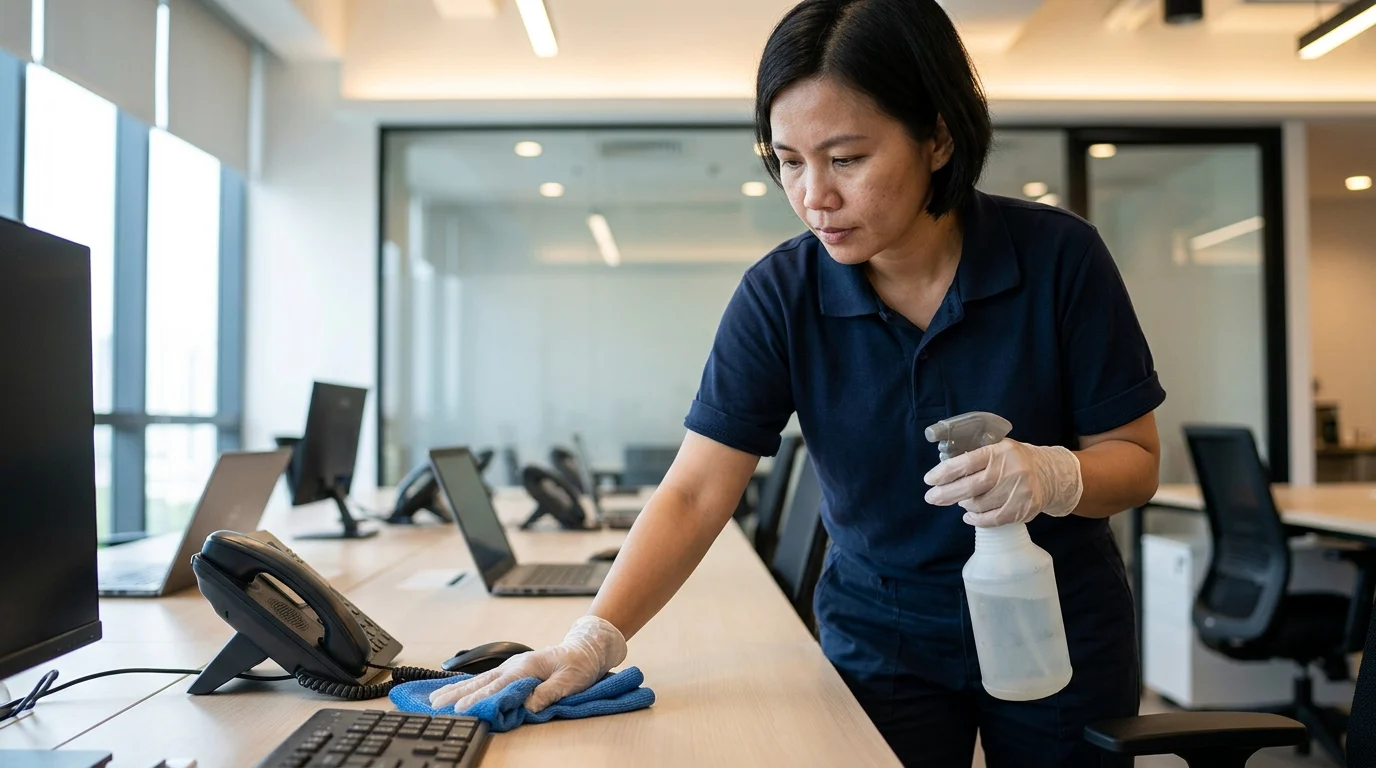
Hygiene and sick days. Shared keyboards, door handles, pantry counters, and meeting room tables are high-touch surfaces that pass germs between colleagues far more efficiently than most people realise. Studies on office hygiene consistently link infrequent disinfection to higher rates of colds, flu, and stomach bugs moving through a team — which shows up as absenteeism, not as a cleaning invoice, so the cost is easy to miss.
First impressions. A client walking into a dusty reception area or a meeting room with a stained carpet forms an opinion about your business before anyone says a word. For service businesses, agencies, and clinics in particular, the state of your office is read as a proxy for the quality of your work.
Productivity and morale. Clutter and grime are low-grade stressors. Teams working in a visibly clean, well-maintained office report higher satisfaction, and a tidy break room genuinely does get used more than a neglected one — which matters for a team that’s supposed to actually take breaks.
Asset longevity. Carpets, upholstered chairs, and glass partitions all degrade faster under Malaysia’s humidity and dust if they’re not cleaned on a proper schedule. A carpet that gets a proper deep clean every quarter can last years longer than one that’s only vacuumed.
None of this shows up as a single line item on a budget, which is exactly why office cleaning frequency tends to get decided once and never revisited. Sick days get attributed to “flu season,” a stained carpet gets blamed on “wear and tear,” and a client comment about the reception area gets brushed off as a one-off. Individually, each of these is easy to explain away. Together, over a year, they add up to a real cost — in absenteeism, in furniture replaced years early, and in the harder-to-measure impression your office leaves on the people who walk through it.
How Often Should You Clean Your Office? A Task-by-Task Schedule
Office cleaning isn’t one task — it’s a stack of different tasks that each have their own natural rhythm. Trying to do everything on the same schedule is how offices end up either over-cleaning cheap tasks or under-cleaning the ones that actually matter for hygiene.
Daily
- Emptying bins and replacing liners
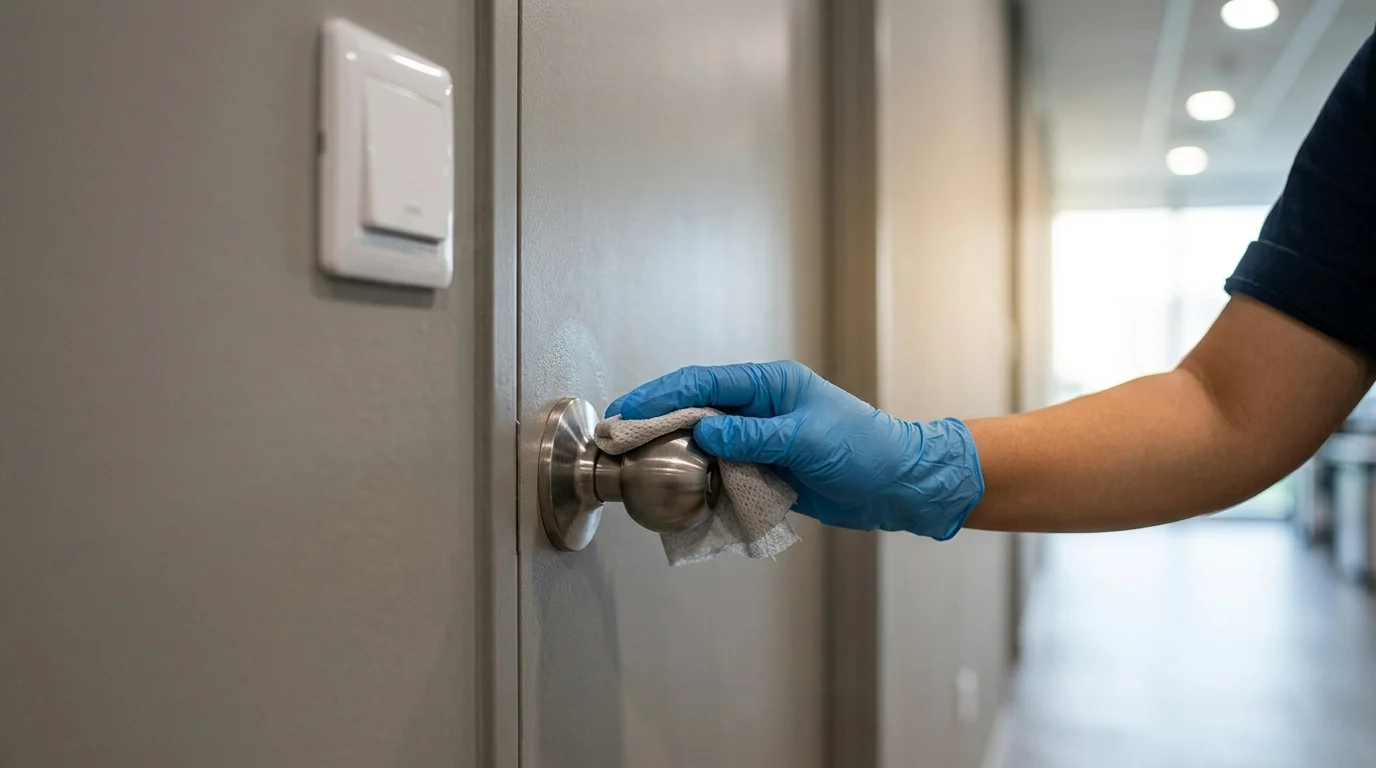
- Wiping high-touch surfaces: door handles, light switches, shared keyboards, lift buttons
- Restroom sanitisation and restocking (soap, tissue, hand sanitiser)
- Break room and pantry surfaces, especially anywhere food is prepared or eaten
- Spot-cleaning spills and visible marks on floors
Weekly
- Full floor cleaning (mopping or vacuuming, not just the visible traffic lanes)
- Glass and mirror cleaning, including entrance doors and meeting room partitions
- Dusting desks, shelves, and equipment surfaces
- Detailed reception area cleaning, since this is the space clients actually see
Monthly and Quarterly
- Deep cleaning of carpets and upholstery (shampoo or hot-water extraction)
- Air vent and air-conditioning unit cleaning — genuinely important in Malaysia, where AC units run constantly and accumulate dust and mould quickly
- Window cleaning, interior and exterior
- Deep disinfection of restrooms, pantry appliances (microwave, fridge interior), and shared equipment
A general office with moderate foot traffic can run comfortably on this daily/weekly/monthly rhythm. Higher-traffic or client-facing spaces need to shift several of these “weekly” items to a daily or twice-weekly cadence — which is exactly what the next section breaks down.
Recommended Cleaning Frequency by Business Type in Malaysia
Not every office needs the same schedule. A ten-person software team and a busy clinic waiting room have completely different hygiene stakes, even if they’re the same square footage. Here’s a practical starting point by business type common in the Klang Valley:
| Business type | Recommended frequency | Why |
|---|---|---|
| Standard office (low-to-moderate foot traffic) | Daily light clean + weekly deep clean | Enough to manage everyday dust and germs without over-servicing an office with limited visitor traffic |
| Co-working space | Daily full clean, twice-daily high-touch wipe-down | High turnover of different people using the same desks, meeting rooms, and pantry throughout the day |
| Clinic or medical office | Daily deep disinfection, continuous high-touch cleaning during opening hours | Direct health exposure; regulatory and patient-safety expectations are far higher than a typical office |
| Retail shoplot / storefront office | Daily full clean, including glass frontage and floors | Constant foot traffic from the public tracks in outdoor dust and grime that a back-office space never sees |
| F&B-adjacent office (attached kitchen, café, or pantry-heavy setup) | Daily deep clean of food-prep and dining areas, standard office schedule elsewhere | Food safety risk and pest attraction make daily cleaning of food areas non-negotiable, regardless of overall office traffic |
If your office doesn’t fit neatly into one row — say, a co-working space with an attached café — default to the more frequent schedule of the two categories involved.
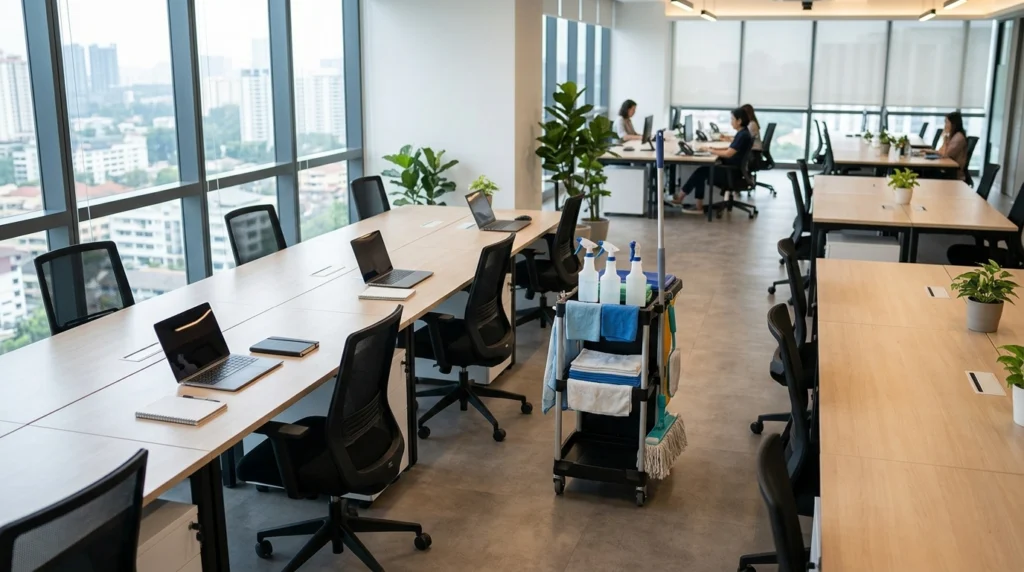
How Malaysia’s Climate Affects Your Office Cleaning Schedule
A cleaning schedule written for a temperate climate doesn’t transfer cleanly to Malaysia, and most of the generic guides available online simply don’t account for this.
Malaysia’s year-round humidity is the biggest factor. Air-conditioned offices create constant condensation around vents and window frames, and any carpet, curtain, or upholstery that isn’t cleaned and properly dried on schedule becomes a mould risk far faster than it would in a drier climate. This is one of the strongest arguments for keeping to the monthly/quarterly deep-clean cadence rather than stretching it out.
Klang Valley traffic and ongoing urban construction also mean more fine dust entering offices through doors, windows, and building ventilation than in a quieter or greener location — glass partitions and air vents in particular need more frequent attention than a generic international guide would suggest. During monsoon season, tracked-in mud and higher indoor humidity both increase, which is a good moment to temporarily bump floor cleaning and dehumidifying to a more frequent schedule.
Air conditioning deserves its own mention here. Almost every office in PJ, Kota Damansara, and Subang Jaya runs AC continuously during working hours, and the units themselves become a hidden source of the problem they’re meant to solve: dust and moisture collect in filters and vents, then get recirculated through the office every time the system runs. An AC unit that isn’t serviced and cleaned on a regular schedule can quietly undo a lot of the benefit of an otherwise well-cleaned office, which is why air vent cleaning belongs in the monthly-to-quarterly rotation rather than being treated as optional.
7 Signs Your Office Isn’t Being Cleaned Often Enough
If you’re not sure whether your current schedule is working, these are the tells:
- Rising sick days across the team without an obvious external cause
- Visible dust build-up on shelves, monitors, or air vents within a few days of cleaning
- Persistent odours in the pantry, restroom, or carpeted areas that air freshener only masks temporarily
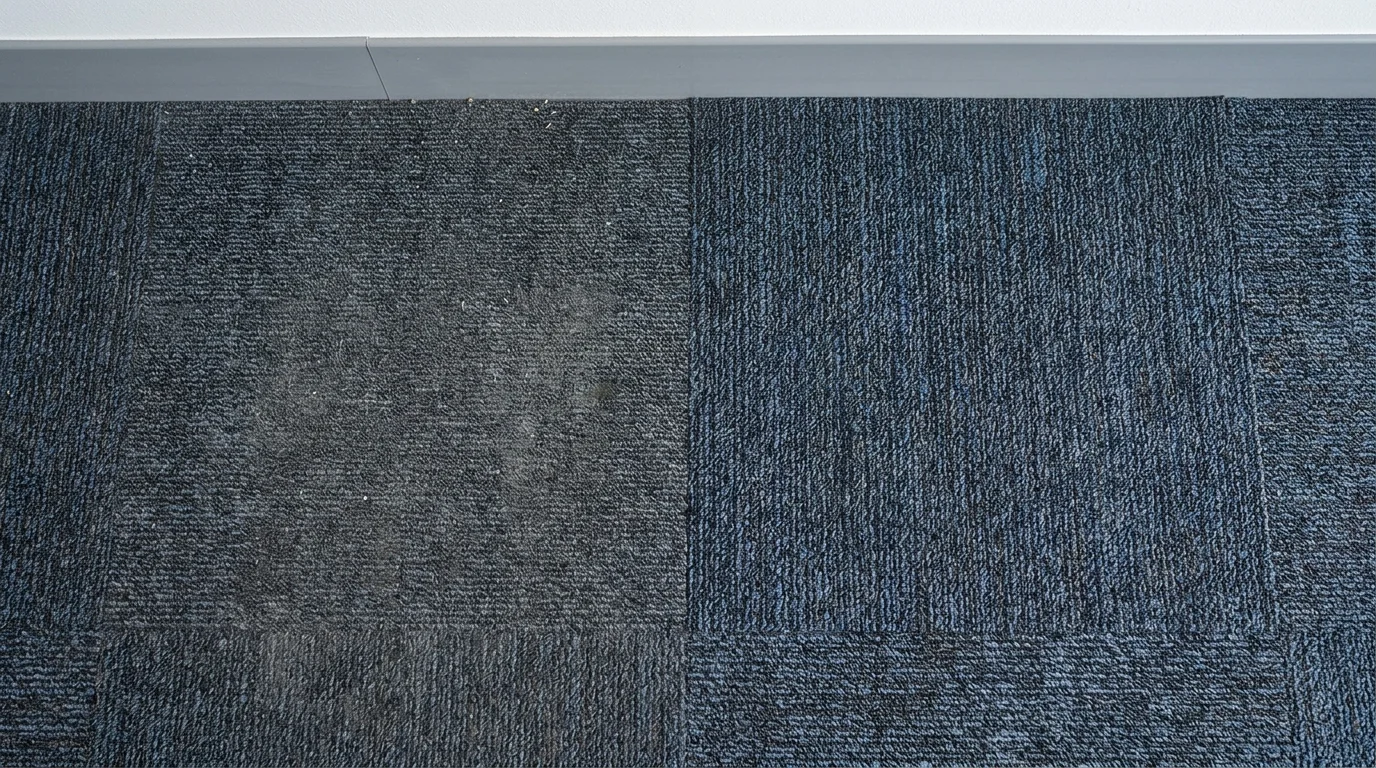
- Stained or matted carpet in high-traffic paths near the entrance and meeting rooms
- Employee complaints or comments about cleanliness — by the time people are mentioning it, it’s usually been a problem for a while
- Pest sightings, even occasional ones, especially near pantry or bin areas
- Client or visitor comments about the state of the reception area or restrooms
One or two of these on their own might be a one-off. Three or more is a clear signal your current frequency doesn’t match your office’s actual traffic and use.
DIY Cleaning vs Hiring a Professional Office Cleaning Service
Most offices start out relying on staff to tidy up, or a general handyman to do a light pass a few times a week. That works fine for a very small team — but it has real limits that tend to show up as the business grows.
Staff tidying diverts time from actual work, even when it’s only ten or fifteen minutes a day per person. It’s also inconsistent by nature: whoever’s turn it is has different standards, different amounts of time, and no proper training in disinfection versus surface tidying — most staff will wipe a desk with a dry cloth, which does very little against the germs that actually cause sick days. And critically, staff tidying almost never covers the deep-cleaning tasks — carpet extraction, air vent cleaning, proper disinfection — that require dedicated equipment most offices don’t have on hand.
A professional office cleaning service closes all three gaps: it’s scheduled and consistent regardless of who’s busy that week, it’s done by people trained specifically in disinfection and surface care, and it comes with the equipment for the deep-cleaning tasks that staff tidying simply can’t reach. For most offices past a handful of employees, the maths works out in favour of professional cleaning once you account for the value of staff time and the cost of premature carpet or furniture replacement.
The two approaches also aren’t mutually exclusive. Plenty of offices keep light daily tidying as a staff habit — clearing desks, wiping down a personal workspace — while handing the scheduled, disinfection-grade cleaning and the periodic deep-clean tasks to a professional service. That split tends to work better than treating it as an all-or-nothing choice: staff handle the small, immediate things throughout the day, and a professional service handles the tasks that actually require training, equipment, and consistency.
How Much Does Office Cleaning Cost in Malaysia?
Office cleaning pricing in Malaysia varies with a few clear factors, so treat any single number you see online as a starting point rather than a quote:
- Office size — priced per square foot or per session, larger spaces naturally cost more per visit but often less per square foot
- Cleaning frequency — a daily contract typically brings a lower per-visit rate than an occasional one-off booking
- Scope of work — a basic tidy-and-surface-wipe costs less than a full package including restroom sanitisation, pantry deep clean, and floor care
- Add-ons — carpet shampooing, upholstery cleaning, and window cleaning are usually quoted separately from the standard recurring clean
As a general Malaysian market indication, small-to-medium offices commonly see rates in the low-to-mid hundreds of ringgit per cleaning session for standard scope, with the exact figure depending heavily on square footage and how often you book. The most reliable way to get an accurate number for your specific office is a quote based on your actual size and scope — pricing quoted without seeing the space is rarely accurate either way.
It’s also worth asking any provider you’re comparing whether their quote is per session, per month, or per square foot, since the same-sounding number can mean very different things depending on which basis it’s quoted on. A per-session rate for a twice-weekly contract adds up very differently than the same-looking figure quoted as a flat monthly price, and it’s an easy detail to miss when you’re comparing quotes side by side.

How to Choose a Reliable Office Cleaning Company in Malaysia
Not all cleaning companies are equal, and the difference usually only becomes obvious after you’ve signed something you regret. A few concrete things to check before committing:
- Vetted, trained staff — ask how cleaners are trained and whether staff are the company’s own employees or subcontracted, since accountability differs significantly between the two
- Insurance coverage — a legitimate cleaning company should carry liability insurance in case of accidental damage
- Transparent pricing — you should be able to get a clear, itemised quote before booking, not a vague estimate that changes on invoice day
- No long lock-in contracts — flexibility to change frequency, pause, or switch providers without penalty matters more than most businesses realise until they need it
- Verifiable reviews and track record — genuine reviews with specifics (not just star ratings) are a far better signal than a polished website alone
This is exactly the gap Top Clean & Clear was built to close. There’s no long-term contract — you can adjust or pause your cleaning schedule as your office’s needs change — and the “pay after we clean” model means you’re only paying once you’ve actually seen the result, not committing upfront on trust alone. That’s on top of a 4.9-star rating across 600+ homes and offices served in PJ, Kota Damansara, and Subang Jaya, which is the kind of track record worth checking for with any provider you’re considering.
Frequently Asked Questions
How often should an office be professionally cleaned?
Most offices need a daily light clean covering bins, high-touch surfaces, and restrooms, plus a weekly deep clean of floors and common areas. Higher-traffic offices, clinics, and client-facing spaces should move to a daily full clean instead.
Is weekly cleaning enough for a small office?
Weekly cleaning alone is usually not enough, even for a small team. High-touch surfaces and restrooms need daily attention regardless of office size, since germs accumulate on a daily cycle, not a weekly one.
What happens if an office is only cleaned monthly?
Monthly-only cleaning typically leads to visible dust build-up, odour problems, and a higher risk of illness spreading through the team, since daily hygiene tasks like restroom sanitisation and surface disinfection get skipped entirely between visits.
Can staff tidying replace professional cleaning?
Staff tidying can handle light day-to-day tidiness, but it can’t replace professional cleaning for disinfection, carpet and upholstery care, or consistent standards, since most staff lack the training and equipment for those tasks.
What’s the difference between office cleaning and commercial cleaning?
Office cleaning typically refers to cleaning a standard workplace — desks, restrooms, common areas — while commercial cleaning is a broader term covering offices as well as retail, medical, and other business premises, often at a larger scale or with industry-specific requirements.
Conclusion
There’s no single correct office cleaning frequency — the right schedule depends on your office type, foot traffic, and how exposed you are to Malaysia’s humidity and dust. What matters is matching the frequency to how your office is actually used, not defaulting to whatever schedule you started with years ago.
If you’re not sure your current setup is right, the lowest-risk way to find out is to test it. Top Clean & Clear’s office and commercial cleaning service runs on a no-contract, pay-after-we-clean basis, so you can trial the right frequency for your office in Petaling Jaya, Kota Damansara, or Subang Jaya without committing to anything upfront.