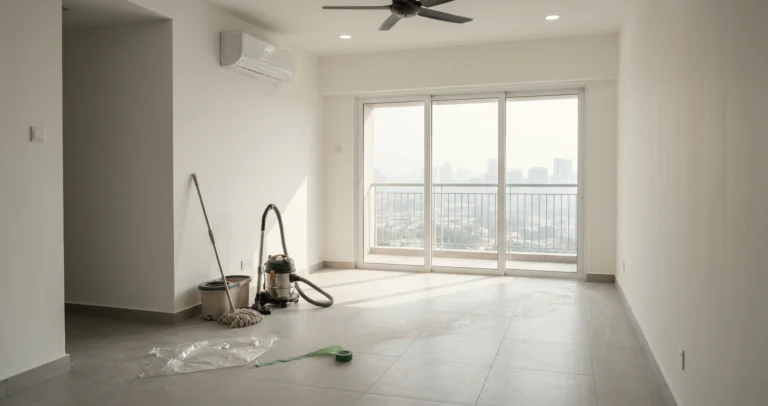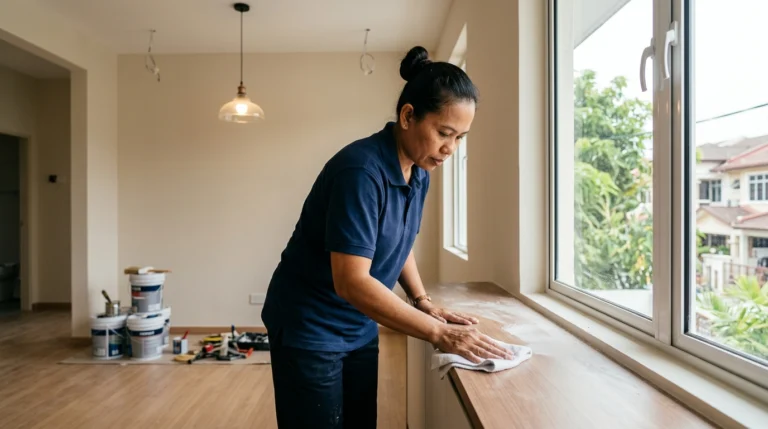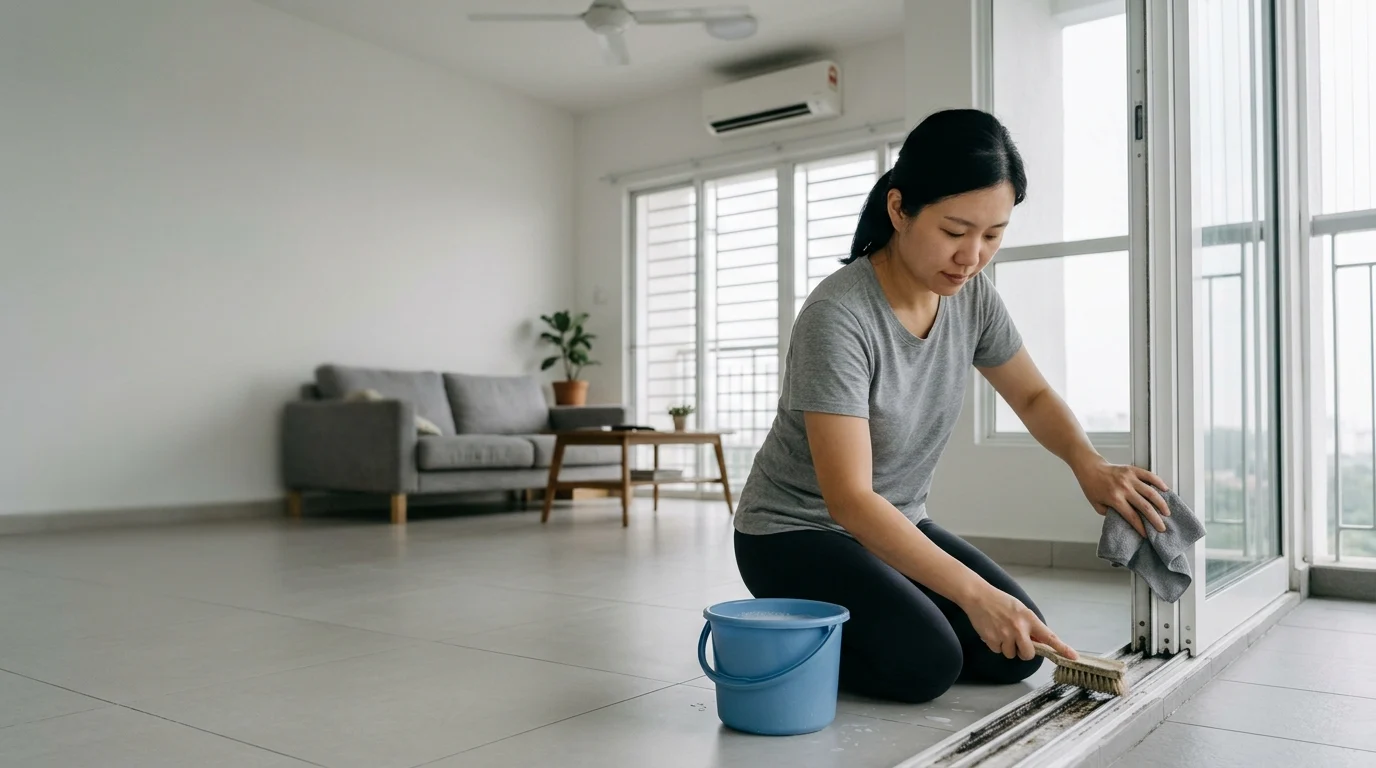
Deep cleaning vs regular cleaning comes down to maintenance versus restoration. Regular cleaning keeps a home tidy: wiping surfaces, vacuuming and mopping floors, refreshing the kitchen and bathrooms. Deep cleaning removes what builds up over months, such as grease, soap scum and mould spots. Most Malaysian homes need regular cleaning weekly or fortnightly and a deep clean every three to six months.
The right rhythm for your home depends on how many people live in it, whether you cook with a lot of oil, whether you have pets, and how well the house is ventilated. The rest of this guide helps you work out where your home sits.
Table of Contents
Deep Cleaning vs Regular Cleaning at a Glance
| Regular cleaning | Deep cleaning | |
|---|---|---|
| Purpose | Keep a clean home clean | Reset a home after months of build-up |
| Typical frequency | Weekly or fortnightly | Every 3–6 months, or before a festive season |
| Focus | Surfaces you see and touch every day | Edges, corners, tracks, grout, behind and under furniture, grease and scale |
| Time needed | A few hours for most homes | Noticeably longer; often a full day or a team working together |
| Effort per visit | Light to moderate | Heavy, detailed, repetitive scrubbing |
| Best for | Maintaining a tidy home | Neglected areas, festive preparation, a fresh start |
The simplest way to remember it: regular cleaning is about maintenance, deep cleaning is about restoration.
What Regular Cleaning Covers
A regular clean deals with the things that get dirty every day. A typical scope looks like this:
- Dusting and wiping reachable surfaces, such as shelves, tables, TV console and window sills
- Vacuuming carpets and rugs, then sweeping and mopping hard floors
- Wiping kitchen countertops, the hob and the outside of appliances
- Cleaning the sink, toilet, basin and shower area
- Emptying bins and tidying
- Making beds or changing linen, if you ask for it
Regular cleaning is fast because it assumes there is no heavy build-up. If grease, scale or mould has already set in, a regular clean will tidy around it rather than remove it. That is when people feel the cleaning “isn’t working”, when the real issue is that the job needs a deeper approach.
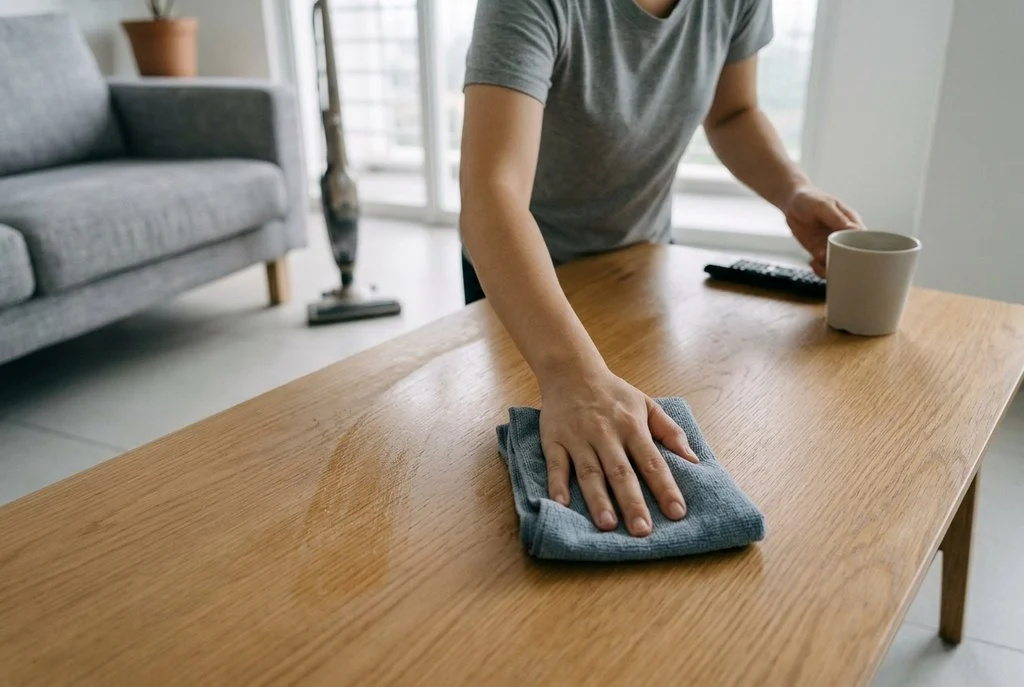
What Deep Cleaning Covers
A deep clean goes after the places and the kinds of dirt that a regular clean skips. These are the usual targets:
Kitchen
- Grease on the hob, backsplash tiles, exhaust hood and cabinet doors
- The outside and, where requested, the inside of appliances
- The sink, taps and drain area
- Cabinet tops, drawers and shelves (best done when empty)
Bathrooms
- Soap scum and limescale on glass screens, taps and tiles
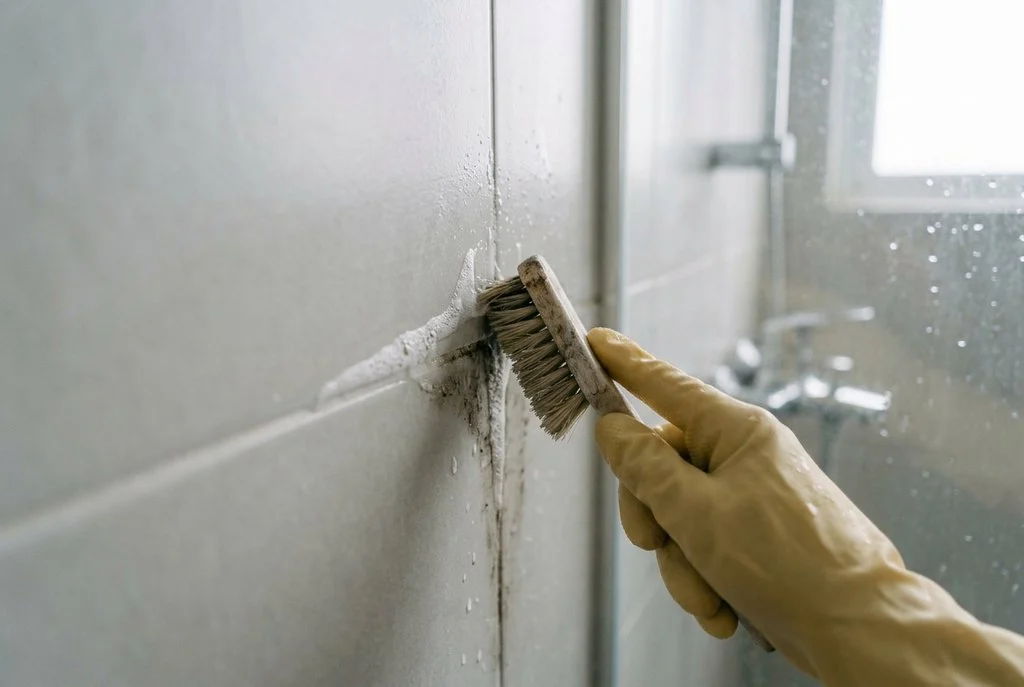
- Grout lines and silicone edges where mould tends to start
- Shower heads, drains and behind the toilet
Living areas and bedrooms
- Behind and under light furniture
- Window glass, frames and sliding tracks
- Ceiling fans, light fittings and the tops of wardrobes
- Skirting boards, doors, door frames and switch plates
- Air-conditioner grilles and vents (the exterior; servicing the inside of the unit is a separate job for an aircon technician)
Scope varies from one cleaner or company to another, and some jobs, such as the inside of an oven or a fridge, may be extras. Before you book, ask for the checklist in writing and confirm which items are included.
One important limit: deep cleaning is not a repair. Grease and scale can often be reduced a lot, but old stains, etched glass and mould that has gone deep into porous material may only lighten. A reputable cleaner will tell you that upfront.
How Top Clean & Clear does it:
Deep cleans are quoted after we look at photos or a video of the home, and the team size and time are confirmed before you book (deep cleaning and spring cleaning service).
Why Humid Malaysian Homes Need Deep Cleans More Often
Most deep-cleaning advice online is written for countries with cold winters and dry indoor air. Malaysia is different, and the difference changes how fast a home gets dirty.
Humidity feeds mould and dust mites. METMalaysia reports that average daily maximum relative humidity is over 94%, with daily minimums of roughly 42% in dry months and up to 70% in wet months. Indoors, the level depends on your aircon, ventilation and how much moisture your household produces, but the starting point is humid air.
The US Environmental Protection Agency advises keeping indoor humidity below 60% and ideally between 30% and 50%, and notes that if damp materials are dried within 24 to 48 hours of a leak or spill, mould will usually not grow. For dust mites, a 2002 article in American Family Physician states that keeping relative humidity below 50% greatly suppresses their growth. A cheap hygrometer from a hardware store lets you check your own rooms instead of guessing.
Where moisture shows up first in a typical Malaysian home
- Bathroom grout and silicone, especially in showers without good ventilation
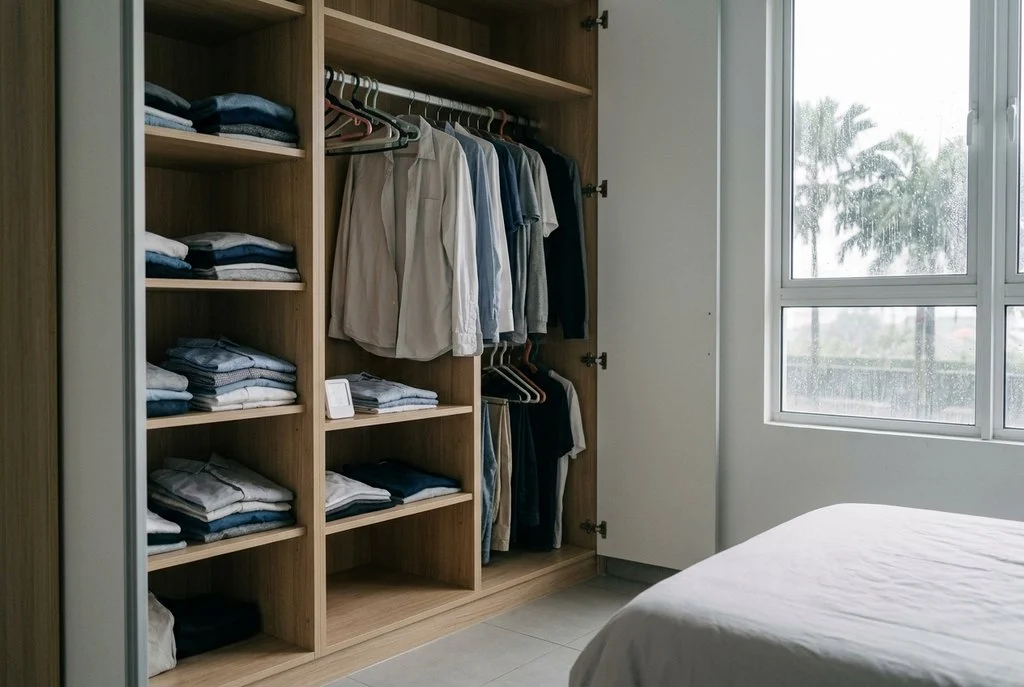
- Wardrobes, particularly built-in ones against an external wall, where clothes can smell musty
- Window tracks, where rainwater, dust and grime mix into a black paste
- Behind furniture pushed tight against a wall
- Under the sink and around the washing machine, where small leaks stay damp
- Fridge door seals and the rubber around washing machine doors
Cooking adds a layer of its own. Frying, stir-frying and cooking with spices put fine oil droplets into the air. They settle on the hood, the tiles and the cabinet doors, then collect dust until the surface turns sticky. Wiping once a week removes the top layer, but only a deeper clean cuts through what has hardened.
Haze makes dust a seasonal problem. Haze events send fine particles into the air, and they work their way indoors. On 5 October 2026, for example, The Star reported eleven areas nationwide in the unhealthy air-quality range, including Cheras at 154 and Johan Setia at 144, where the “unhealthy” band runs from 101 to 200. When the air is bad, keep windows closed, wipe surfaces more often with a damp cloth, and plan a deeper clean once the haze clears.
Practical ways to slow the build-up between cleans
- Run the exhaust fan or open a window after showering
- Keep wardrobes slightly away from external walls and let them air out
- Use an aircon or dehumidifier on very humid days
- Dry wet towels and mats instead of leaving them folded
- Wipe the stove and backsplash after oily cooking, while the grease is still soft
Which One Do You Need? A Decision Guide
| Your situation | What to book |
|---|---|
| The home is in decent shape and you want to keep it that way | Regular cleaning (weekly or fortnightly) |
| You have not had a thorough clean in six months or more | Deep cleaning |
| Visible grease, scale, mould spots or sticky surfaces | Deep cleaning |
| Getting ready for Chinese New Year, Hari Raya, Deepavali or Christmas | Deep cleaning, often called spring cleaning |
| Someone in the home has dust or mould allergies | Regular cleaning plus a deep clean every 3 months |
| Just finished renovating | Post-renovation cleaning, which is different from deep cleaning. See our post-renovation cleaning checklist |
| Moving in or out of a rental or a new home | Move-in/move-out cleaning, usually a one-off deep-style clean of an empty unit |
| Water damage, flooding or sewage | A restoration specialist, not a cleaner |
A note on “spring cleaning”. Spring cleaning is simply the Western name for a seasonal deep clean. Malaysia has no spring, but the idea exists here too: many Chinese families do a thorough da sao chu (大扫除) before Chinese New Year, and many Malay and Indian families clean the house thoroughly before Hari Raya and Deepavali. If a company sells both “deep cleaning” and “spring cleaning” and the scope looks the same, they are the same service with a seasonal label.
Why post-renovation is not just a bigger deep clean. Renovation leaves fine dust, cement residue, paint marks and adhesive. These need to be removed in a specific order, with a lot of dry dust removal before anything is wet-mopped. Using the wrong approach just turns the dust into paste. Our guide to post-renovation cleaning in KL explains the health and timing side in more detail.
How Often Should You Do Each?
There is no official rule, so treat these as starting points and adjust.
| Type | Starting point | Do it sooner if… |
|---|---|---|
| Regular cleaning | Weekly or fortnightly | You have kids, pets, a big household or a lot of foot traffic |
| Deep cleaning | Every 3–6 months | You cook with a lot of oil, have allergies, live on a low floor near a road or construction site, or the home is humid |
| Mattress and sofa care | Vacuum regularly, deep clean once or twice a year | There are allergies, spills or pets |
| Bedding wash | Every one to two weeks | Dust mite allergy |
The AAFP review cited above recommends washing bedding every one to two weeks in water of at least 54.4°C (130°F) to kill dust mites, and notes that cooler water removes most allergens but does not kill the mites. If you are sensitive to dust mites, speak to a doctor. Cleaning helps reduce triggers, but it is not treatment.
A useful pattern for many homes is regular cleaning every week or two, plus one deep clean every season, timed around events: one before Chinese New Year, one mid-year, one before Deepavali or the year-end holidays. A deep clean on top of regular cleaning makes each regular visit faster and easier, because there is less to fight.
Time and Cost: What to Expect and How to Compare Quotes
Prices vary a lot between providers, so this section focuses on how to compare rather than quoting a single figure.
Time. A regular clean is usually a few hours for one cleaner. A deep clean takes longer because the work is slower and more detailed, so it is often done by a team in a single day, or over several days for large or neglected properties.
How providers price. You will usually see one of these:
- By the hour: common for regular cleaning and part-time help
- By the job or visit: a fixed price after the provider sees the home
- By floor area: often used for post-renovation and move-out cleaning
What affects a deep-clean quote
- Size of the home and number of bathrooms
- How heavy the grease, scale or mould is
- Whether the home is empty, furnished or cluttered
- How many extras you add, such as inside the oven, fridge or cabinets
- Access: lift, parking, floor level
Questions to ask before you book
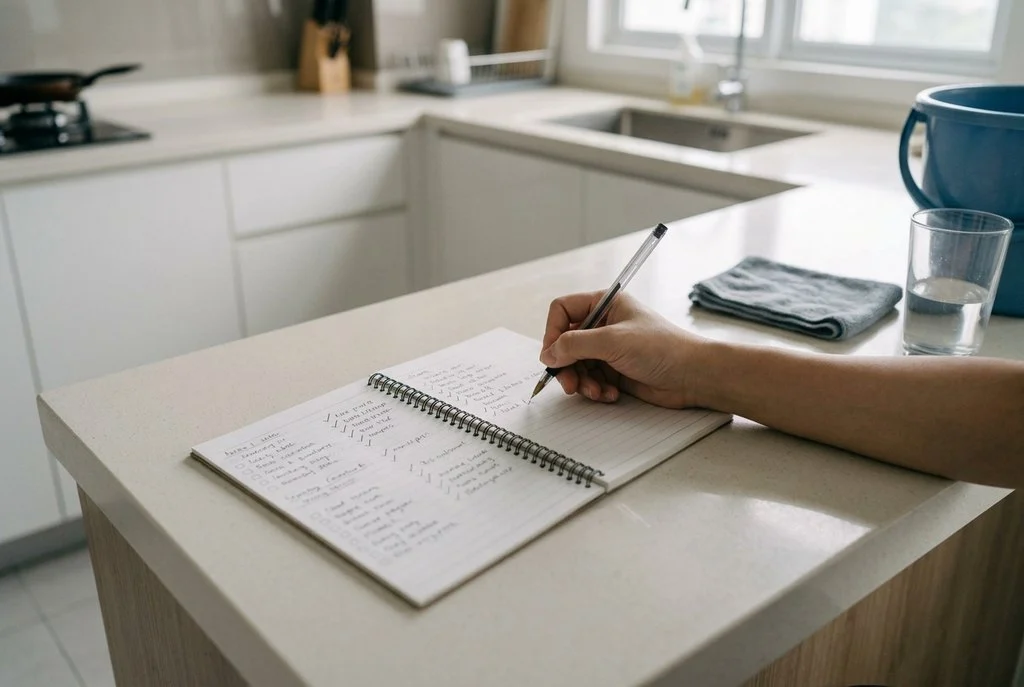
- What exactly is included? Can I have it in writing?
- How many cleaners will come, and for how many hours?
- Do you bring your own tools and products, or is that extra?
- Is the price fixed, or can it change on the day?
- Is transport included?
- When do I pay, and is a deposit needed?
- What happens if something is missed?
Be cautious of a very low price quoted without any questions about your home. A deep clean depends on the condition of the property, so a fair quote usually starts with photos, a video or a visit.
Doing a Deep Clean Yourself: A Four-Weekend Plan
If you would rather do it yourself, work in stages. Trying to deep clean the entire home in one weekend usually ends in exhaustion and a half-finished job.
Weekend 1: Kitchen
- Empty and wipe cabinets and drawers
- Degrease the hob, hood and backsplash. Soak removable parts in hot soapy water
- Clean the fridge, including door seals, and defrost if needed
- Scrub the sink and drain area
Weekend 2: Bathrooms
- Remove soap scum from glass and tiles
- Scrub grout lines with a brush; treat mould spots
- Descale taps and shower head
- Wash bath mats and shower curtains
Weekend 3: Bedrooms and wardrobes
- Wash bedding and vacuum the mattress
- Empty wardrobes, wipe shelves, air them out and re-pack
- Dust fans, light fittings and tops of furniture
- Vacuum behind and under beds
Weekend 4: Living areas and finishing touches
- Clean window tracks and wipe frames
- Wipe skirting boards, doors and switch plates
- Vacuum sofas and move light furniture to clean behind
- Mop floors last
Safety notes
- Never mix bleach with vinegar, ammonia or other cleaners. The combination can release harmful fumes.
- Open windows and wear gloves when using strong cleaners.
- Test a hidden spot first, especially on natural stone, wood and painted surfaces.
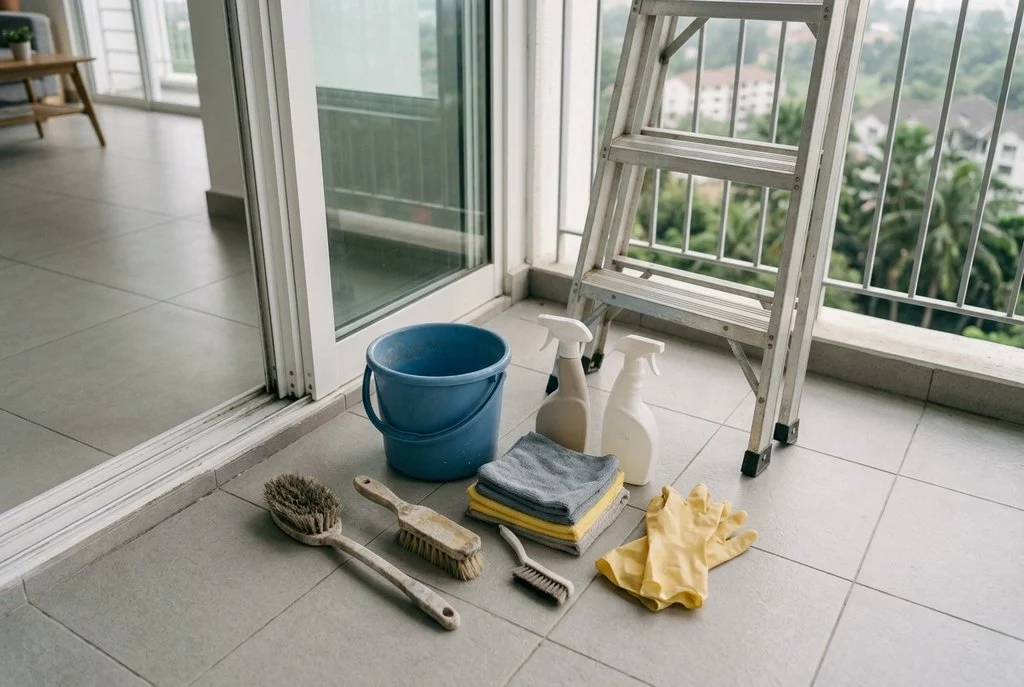
- Do not climb on unstable chairs to reach high areas. Use a proper step ladder.
If you run out of weekends, or the grease, scale or mould is beyond what a scrub brush can handle, that is the point where hiring a professional makes sense.
Frequently Asked Questions
What is the difference between deep cleaning and regular cleaning?
Regular cleaning keeps surfaces, floors, the kitchen and the bathrooms tidy. Deep cleaning is more detailed and removes built-up grease, soap scum, scale, mould spots and dust from areas regular cleaning skips, such as window tracks, behind furniture, grout lines and cabinet interiors.
How often should a house be deep cleaned in Malaysia?
A common guideline is every three to six months. Homes with heavy cooking, pets, allergies or high humidity may need it closer to every three months. Many households also do one before Chinese New Year, Hari Raya or Deepavali.
Is spring cleaning the same as deep cleaning?
In practice, yes. Spring cleaning is the seasonal name for a deep clean. In Malaysia the equivalent is the thorough cleaning many households do before major festivals.
Does deep cleaning remove mould?
Deep cleaning can remove surface mould and light mildew on tiles, grout, silicone and some hard surfaces. Mould that has penetrated porous materials, such as wood, plaster or fabric, may only lighten, and mould caused by a leak will return until the leak is fixed.
Do I need to deep clean before or after regular cleaning starts?
Many people start with a deep clean to reset the home, then switch to regular cleaning to maintain it. This makes regular visits quicker and cheaper over time because there is less build-up to remove.
Is a deep clean the same as post-renovation cleaning?
No. Post-renovation cleaning deals with fine construction dust, cement residue, paint and adhesive, and needs a particular order of work. Deep cleaning targets built-up household dirt in an occupied or furnished home.
Should I be home during a deep clean?
It depends on the provider and your comfort level. Many people stay for the first visit to walk through the home, point out priorities, and secure valuables. Whatever you choose, agree on access and on any rooms or items that should not be touched.
In Short
Regular cleaning keeps a home tidy from week to week, and deep cleaning resets the build-up that regular cleaning leaves behind. In humid Malaysia, a sensible rhythm for most homes is regular cleaning every week or two and a deep clean every three to six months, timed around festive seasons and adjusted for cooking habits, allergies and haze. Book a deep clean when you see grease, scale or mould spots, use post-renovation cleaning after building work, and always ask for the scope and price in writing before you book.